

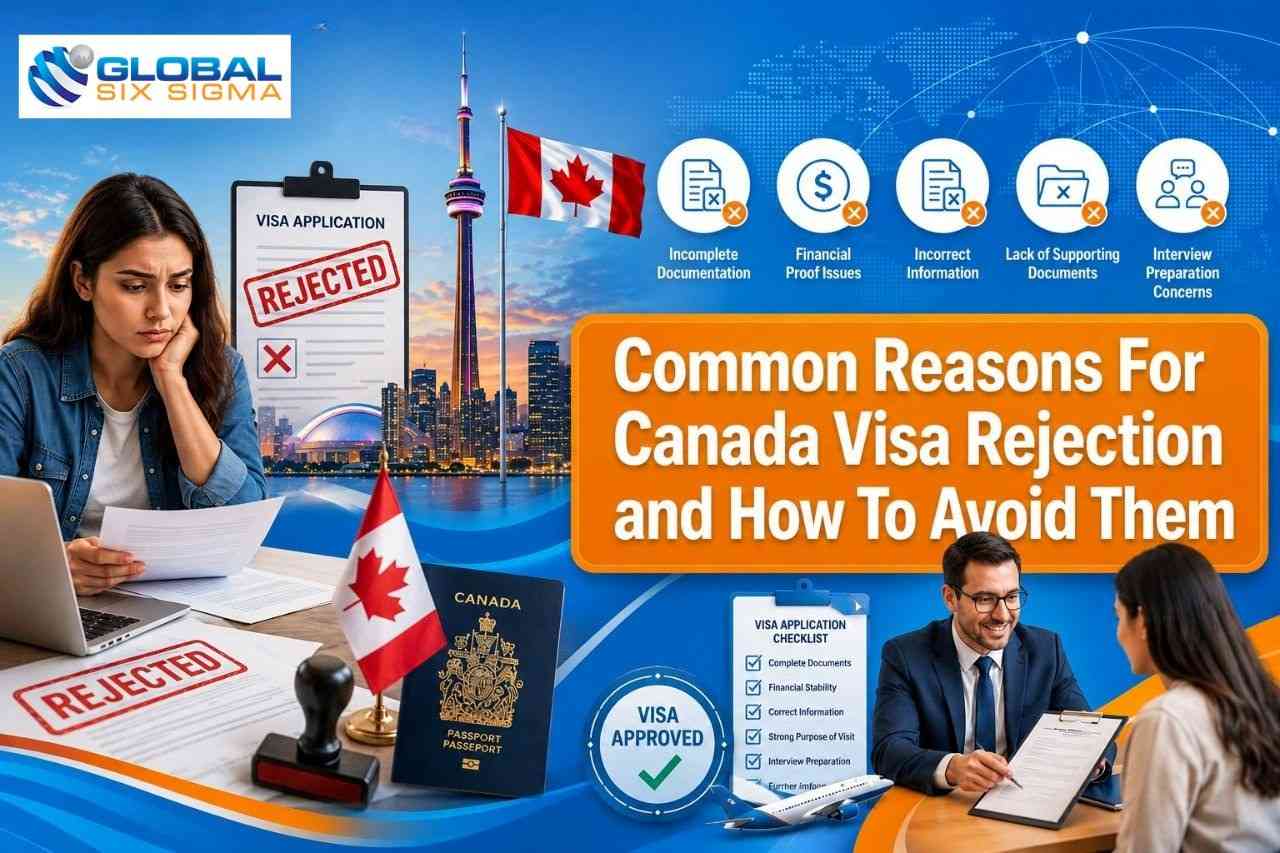
Common Reasons For Canada Visa Rejection and How To Avoid Them
Canada remains one of the most preferred destinations for students, skilled professionals, and immigrants seeking world-class education, career opportunities, and a high quality of life. Global Six Sigma helps aspiring international students and professionals navigate their educational and career journeys through expert guidance, career-focused training, and global opportunities. However, obtaining a Canadian visa requires careful preparation and compliance with immigration requirements. Many applicants face rejection due to avoidable mistakes that could have been prevented with proper planning and professional support. Understanding the Common Reasons For Canada Visa Rejection and How To Avoid Them can significantly improve your chances of visa approval.
Incomplete or Incorrect Documentation
One of the most common reasons for visa rejection is submitting incomplete, inaccurate, or inconsistent documentation. Canadian immigration authorities carefully review every application, and even minor errors can raise concerns about the credibility of the applicant.
Missing Required Documents
Applicants sometimes fail to include important documents such as educational certificates, financial records, employment letters, passport copies, or proof of admission from a designated learning institution.
Inconsistent information
Any discrepancies between application forms and supporting documents may result in delays or rejection. information regarding employment history, education, travel history, and personal details should be accurate and consistent throughout the application.
How To Avoid This issue
- Carefully review all document requirements.
- Double-check application forms before submission.
- Ensure all information matches supporting documents.
- Seek professional guidance if you are unsure about documentation requirements.
Students planning overseas education can also explore our Study Abroad Programs, international Education Guidance, and Career Development Courses for additional support and preparation.
Insufficient Financial Proof
Financial stability plays a crucial role in visa approval decisions. Immigration officers must be satisfied that applicants can support themselves during their stay in Canada without financial hardship.
Common Financial Mistakes
Many applications are rejected because:
- Bank statements show insufficient funds.
- Financial documents are outdated.
- The source of funds cannot be clearly verified.
- Sponsorship documents are incomplete.
For student visas, applicants must demonstrate their ability to cover tuition fees, living expenses, accommodation costs, and travel expenses.
How To Avoid This issue
- Maintain sufficient funds before applying.
- Provide updated bank statements and financial records.
- Clearly explain the source of funds.
- include supporting sponsorship documentation where applicable.
Strong financial documentation significantly increases the credibility of your application and demonstrates preparedness for living in Canada.
Lack Of Strong Ties To Home Country
Visa officers often assess whether an applicant intends to return to their home country after completing their authorized stay. If the officer believes there is insufficient evidence of returning home, the application may be refused.
Factors Considered By Visa Officers
Immigration authorities may evaluate:
- Current employment status
- Family commitments
- Property ownership
- Business interests
- Financial responsibilities
Applicants who fail to demonstrate meaningful connections to their home country may face concerns regarding immigration intent.
How To Avoid This issue
- Provide proof of stable employment.
- Include evidence of family obligations.
- Submit property or business ownership documents.
- Clearly explain future plans after completing studies or work in Canada.
Demonstrating strong home-country ties helps reassure visa officers that you intend to comply with visa conditions.
Weak Statement Of Purpose Or Application Justification
A Statement of Purpose (SOP) is one of the most influential documents in a student visa application. Many applications are rejected because the SOP fails to clearly explain the applicant’s goals, educational plans, and reasons for choosing Canada.
Common SOP Mistakes
- Generic or copied content
- Unclear career objectives
- Lack of connection between previous studies and future goals
- insufficient explanation for choosing a specific course or institution
How To Avoid This issue
- Write a personalized and genuine SOP.
- Clearly explain academic and career objectives.
- Highlight why Canada is the right destination.
- Connect your chosen course with future professional plans.
A well-structured SOP strengthens your application and helps immigration officers understand your intentions.
Previous Immigration Or Travel issues
Past immigration violations or travel-related concerns can negatively impact future visa applications.
Examples include:
- Visa overstays
- Misrepresentation of information
- Previous refusals without explanation
- incomplete travel history disclosures
Canadian authorities carefully review previous immigration records when evaluating applications.
How To Avoid This issue
- Be completely honest in your application.
- Disclose previous visa refusals if applicable.
- Provide explanations for any immigration concerns.
- Maintain transparency throughout the process.
Honesty and accurate disclosure are essential for building trust with immigration authorities.
Benefits of Professional Visa Guidance
Applying for a Canadian visa can be a complex process involving documentation, financial verification, eligibility assessments, and immigration regulations. Professional guidance helps applicants avoid costly mistakes and improve application quality.
Experienced consultants can assist with:
- Application review and preparation
- Documentation support
- SOP guidance
- Financial documentation advice
- Visa interview preparation
- Compliance with immigration requirements
Students and professionals can also explore our Study Abroad Counselling Services, Career-Oriented Certification Programs, and international Education Support Resources to strengthen their global education and career plans.
Conclusion
Understanding the Common Reasons For Canada Visa Rejection and How To Avoid Them can help you avoid common mistakes and improve your chances of approval. With proper documentation, financial planning, and expert guidance, the visa process becomes much smoother.
Global Six Sigma is here to support your study abroad and career aspirations with professional guidance and industry-focused programs.
FAQ'S
Missing, inaccurate, or inconsistent documents can affect approval chances. Common Reasons For Canada Visa Rejection and How To Avoid Them include ensuring complete and accurate paperwork.
Financial stability is a key requirement for approval. Common Reasons For Canada Visa Rejection and How To Avoid Them often involve insufficient funds or weak financial documentation.
Yes, a poorly written SOP can create doubts about your intentions. Common Reasons For Canada Visa Rejection and How To Avoid Them include preparing a clear and convincing statement.
Officers evaluate whether applicants intend to return after their stay. Common Reasons For Canada Visa Rejection and How To Avoid Them include demonstrating strong personal and professional ties.
Careful planning, accurate documentation, and expert guidance help strengthen applications. Common Reasons For Canada Visa Rejection and How To Avoid Them highlight these important steps.
Key Words
- Canada Visa Rejection Reasons
- Canada Student Visa Rejection
- Canada Visa Refusal Causes
- Canada Visa Approval Tips
- How To Avoid Canada Visa Rejection
- Canada Study Permit Rejection
- Canada Visa Application Mistakes
- Canada Immigration Visa Refusal
- Canada Student Visa Success Tips
- Canada Visa Documentation Requirements
Post a Comment